
What this Dify vs FastGPT comparison covers
This article is for builders searching Dify vs FastGPT, FastGPT vs Dify, Dify vs Coze, Coze RAG, OpenClaw, and adjacent AI agent tools in 2026. It focuses on RAG capability, knowledge-base setup, workflow orchestration, deployment fit, and which platform is better for practical AI assistant projects.
AI Agent Programming 2026
Go deeper on agent frameworks, production workflows, orchestration choices, and implementation paths.
FastGPT Deployment Guide
Use this if the FastGPT side of the comparison is your likely choice for a knowledge-base assistant.
Zotero arXiv Daily Workflow
A practical research automation workflow that can feed documents into knowledge-base systems.
AI Voice Input Tools 2026
Compare voice-first AI tools for writing, note capture, and multilingual input.
OpenClaw AI Assistant Framework 2026
See the OpenClaw framework, architecture, and official-doc style overview for personal AI assistants.
LLM JSON Output Guide
Useful if your agent workflow depends on reliable structured output, valid JSON, and machine-readable model responses.
FastGPT vs Dify: which is better for RAG knowledge-base agents?
FastGPT is often stronger when the primary job is a focused knowledge-base assistant with direct RAG setup. Dify is usually better when the assistant also needs multi-step workflows, app logic, integrations, or broader LLM product orchestration around retrieval.
What is the main difference between Dify, FastGPT, and Coze?
Dify is usually evaluated as a workflow and app-building platform for LLM products, FastGPT is commonly compared for knowledge-base and RAG assistant workflows, and Coze is often considered when users want a bot-building environment with packaged channels and simpler assistant setup.
Should I choose Dify or FastGPT for a knowledge-base assistant?
Choose FastGPT when the core requirement is a focused knowledge-base assistant with direct RAG setup. Choose Dify when the RAG flow also needs broader workflow orchestration, app logic, integrations, or product-style deployment control.
When is Coze a better fit than Dify or FastGPT?
Coze is usually worth considering when bot-building speed, packaged channels, and a simpler assistant setup matter more than deep knowledge-base tuning or custom workflow ownership.
Dify vs Coze: which is better for RAG workflows?
Dify is usually the stronger choice when the RAG workflow needs app logic, retrieval control, testing, and production ownership. Coze can be a better fit when the goal is to launch a simpler bot experience quickly through packaged channels.
Does Coze work for RAG knowledge-base assistants?
Coze can support knowledge-style bot workflows, but builders comparing Coze RAG against Dify or FastGPT should check retrieval control, data-source limits, logging, channel requirements, and whether the project needs a bot shell or a more owned AI application.
When should a builder consider OpenClaw instead?
OpenClaw is worth considering when the project is closer to a personal AI assistant framework or multi-tool assistant architecture rather than a narrow no-code knowledge-base bot.
What should you compare before choosing an AI agent tool?
Compare data-source support, retrieval quality, workflow control, deployment path, pricing, channel integrations, logging, and how easily the tool can be tested against real assistant tasks instead of demos.
充值咨询
需要处理 ClaudeCode 或 GPT 充值需求?
ClaudeCode、GPT 充值/代充、团队采购和长期需求,进入对应咨询页提交信息。
当前不配置自动支付,价格、地区和到账安排统一人工确认。
type
status
date
summary
tags
category
slug
icon
password
公众号
关键词
小宇宙播客
小红书
数字人视频号
笔记
Mainstream Open Source AI Knowledge Base Tools Review: FastGPT, Dify, Coze
Introduction
Against the backdrop of rapid development in AI applications today, various AI knowledge base tools are emerging constantly, offering rich functionality and application scenarios. This article focuses on three mainstream AI knowledge base tools—FastGPT, Dify, and Coze—evaluating their performance in terms of features, usability, subscription models, and market overview to help developers quickly choose the most suitable tool.
What is RAG?
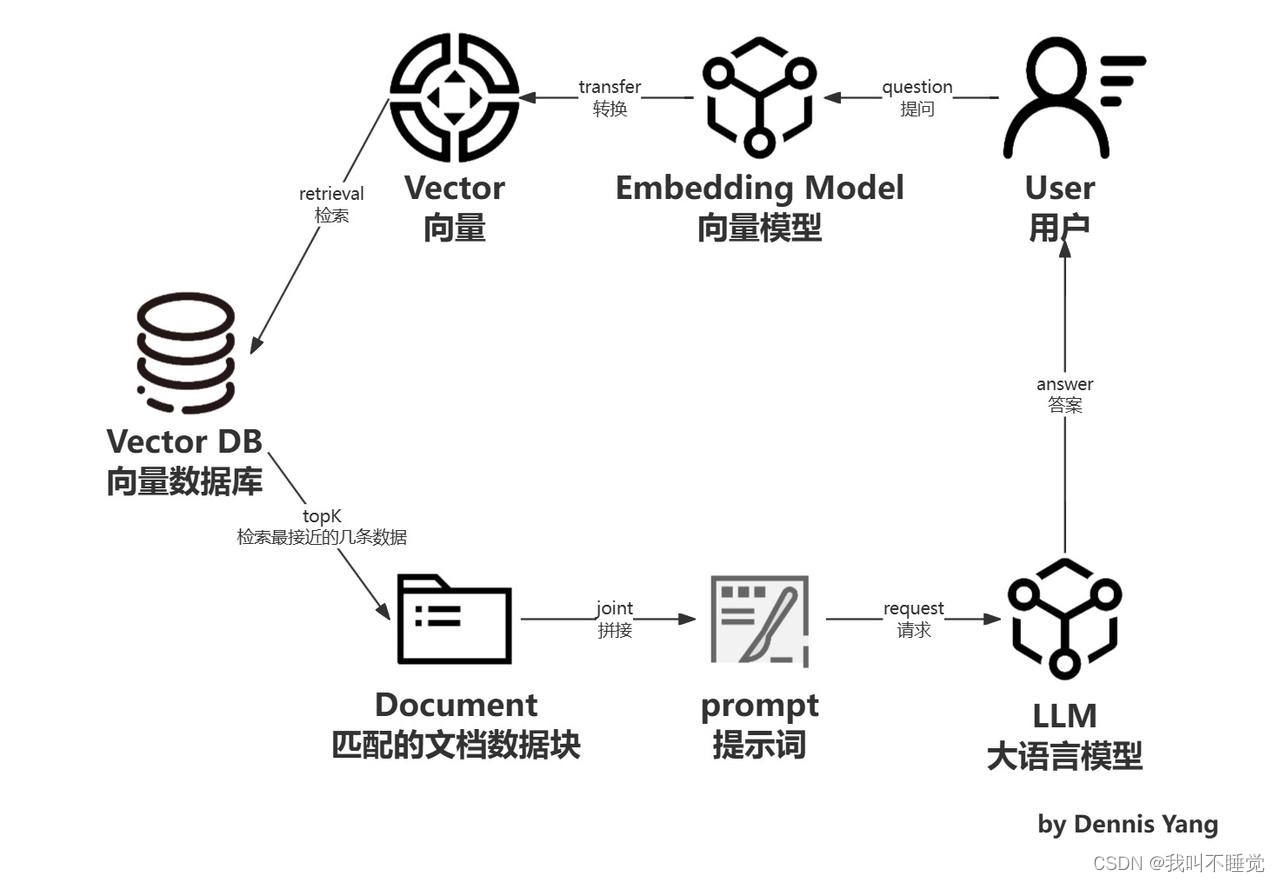
RAG, short for Retrieval-Augmented Generation, is an AI model that combines retrieval and generation. By referencing information from external knowledge bases, RAG models generate content with higher accuracy and interpretability. This technology was first proposed by the Facebook AI Research team in 2020 and has been widely applied to natural language processing tasks such as question-answering systems, document generation, and intelligent assistants. The core advantage of RAG models lies in their versatility, enabling real-time knowledge updates and providing efficient, accurate information services through end-to-end evaluation methods.
RAG also has the capability to optimize outputs from large language models (LLMs), allowing them to reference domain-specific knowledge bases without retraining, thereby improving the relevance and reliability of generated content. RAG models build data structures through indexing for efficient retrieval, then retrieve from external knowledge bases based on user queries, and finally integrate the query content to generate responses. This workflow makes RAG a flexible knowledge base management solution, suitable for knowledge integration needs in chatbots and other conversational systems.
Tool Overview: FastGPT, Dify, Coze
1. FastGPT
FastGPT is a knowledge base Q&A system based on large language models (LLM) launched by Huanjie Cloud Computing, providing out-of-the-box data processing and model invocation capabilities. Through its Flow visual interface, FastGPT supports workflow orchestration, making the implementation of complex Q&A scenarios simple and efficient.
2. Dify
Dify is an open-source LLM application development platform developed by Suzhou Yuling Artificial Intelligence Technology Company. It combines Backend as a Service and LLMOps concepts, enabling even non-technical personnel to quickly build production-grade generative AI applications.
3. Coze
Coze is an AI chatbot development platform launched by ByteDance, aimed at lowering the barrier for users to build chatbots. Coze provides a Web SDK, allowing users to conveniently embed bots into web applications, expanding its application scenarios.
Feature and Capability Comparison
1. Large Model Integration Capabilities
In terms of large model integration, FastGPT, Dify, and Coze each have their own focus:
- FastGPT: Supports most mainstream models, compatible with OneAPI, and niche models can be added through configuration files.
- Dify: Offers more model options, with configuration completed directly in the system interface, supporting both OneAPI and Ollama.
- Coze: Primarily supports domestic large models such as Doubao and Zhipu, with slightly less flexibility.
工具 | 支持模型 | 配置方式 | 用户体验 |
FastGPT | 主要支持 OpenAI | 通过 OneAPI 适配 | 配置较复杂 |
Dify | 支持 OneAPI、Ollama 等多种模型 | 系统界面直接配置 | 体验友好 |
Coze | 支持国内模型豆包和智谱 | 免配置 | 模型数量较少 |
2. Application Publishing Support
In terms of application publishing, the three tools also demonstrate different characteristics:
- Both FastGPT and Dify support API calls, multi-browser window preview, and generate multiple API keys.
- Coze is suitable for specific platforms, but support for other platforms is somewhat limited, requiring additional time for integration.
工具 | 浏览器窗口预览 | 应用嵌入 | API 调用 | 平台友好性 |
FastGPT | 支持 | 支持 | 支持 | 对多平台支持友好 |
Dify | 支持 | 支持 | 支持 | 操作简单,适合新手 |
Coze | 支持 | 支持 | 不支持 | 更适合字节平台,集成不便 |
3. Chat Functionality
Each platform's design focus for chat functionality configuration is as follows:
- FastGPT: Suitable for complex application scenarios, supporting diverse features such as global variables, scheduled execution, and input guidance.
- Dify: Simple and automated, supporting automatic prompt generation across multiple large language models, reducing manual input.
- Coze: Focuses on conversational experience and personalized memory, enhancing interactive effects through rich dialogue settings.
工具 | 功能特点 | 适合场景 |
FastGPT | 全面功能设置,满足复杂需求 | 复杂应用场景,需自定义的用户 |
Dify | 自动化提示词生成,简化操作 | 快速部署与开发 |
Coze | 个性化记忆,提升互动体验 | 对话体验要求高的用户 |
4. Knowledge Base Functionality
The knowledge base is the core of AI applications, and all three tools have distinct advantages in their knowledge base features:
- FastGPT: Supports intelligent training mode, retrieval optimization, etc., suitable for efficient knowledge base construction needs.
- Dify: Provides flexible segmentation and indexing settings, suitable for users with specific segmentation requirements.
- Coze: Multi-data source support with excellent table and image processing experience, though intelligent annotation effectiveness has slight room for improvement.
工具 | 初始化知识库构建 | 文件支持 | 检索和参数设置 |
FastGPT | 多选索引模型,构建简便 | 文本、网页 | 提供丰富检索设置 |
Dify | 支持 Notion 同步和文本导入 | 文本文件 | 自定义分段与索引设置 |
Coze | 支持多数据源 | 文本、表格、图片 | 丰富检索策略,参数灵活配置 |
5. Workflow
In terms of workflow application creation and configuration, FastGPT offers rich functionality, suitable for scenarios requiring complex workflows; Dify has clear logic, suitable for lightweight workflows; while Coze is suitable for beginners to get started quickly through simple operations.
工具 | 工作流创建方式 | 节点类型丰富度 | 技术需求 |
FastGPT | 简易应用转换或直接创建 | 节点多,功能全面 | 较高 |
Dify | 新建空白应用 | 逻辑清晰 | 中等 |
Coze | 添加工作流轻松上手 | 简单操作快速入门 | 低 |
Conclusion
The above Charlii evaluation comprehensively analyzes the core features and application scenarios of FastGPT, Dify, and Coze. FastGPT is suitable for users who need complex functionality and flexible customization, Dify focuses on automation and simple operations, suitable for efficient development scenarios, while Coze emphasizes conversational experience, suitable for users with high requirements for interactivity and personalization. We hope this article helps you choose the most suitable AI knowledge base tool and accelerate the implementation of your AI projects!
充值咨询
需要处理 ClaudeCode 或 GPT 充值需求?
ClaudeCode、GPT 充值/代充、团队采购和长期需求,进入对应咨询页提交信息。
当前不配置自动支付,价格、地区和到账安排统一人工确认。